Lael Wilcox on Her Around the World Record Attempt and Why She Stopped
Some rides finish at the finish line; others stay with you forever.
After becoming the fastest woman to cycle around the world in 2024, Quad Lock Athlete and ultra-endurance bicycle racer Lael Wilcox returned this year with an even bigger goal: to challenge the outright around-the-world Guinness cycling record. It was a ride that demanded months of preparation, a dedicated support crew and close to 400 kilometres in the saddle every day.
But sometimes the toughest opponent isn't the distance – it's the conditions. After two weeks battling an intense European heatwave, Lael made the difficult decision to end her attempt after experiencing severe heat exhaustion. While it wasn't the outcome she'd hoped for, the ride became another reminder that endurance isn't just about pushing harder; it's also about knowing when to listen to your body. We caught up with Lael to reflect on the experience, the lessons she'll take into her next adventure, and what continues to fuel her passion for life on two wheels.
We caught up with Lael to talk about the attempt, the lessons she'll carry forward, and what continues to inspire her to keep pushing the boundaries of what's possible.
Read more: Cycling 18,000 Miles in 110 Days: Lael Wilcox's Journey to Break the World Record, our coverage of Lael's 2024 record-breaking ride.
What Lael Wilcox is most proud of from the first two weeks
You set out to chase one of the world's toughest cycling records in endurance sport. Looking back now, what are you most proud of from those first two weeks?
I'd say I'm most proud of all the effort I put in; it was not just me, but me and the team. It was 12 out of 14 days with headwinds. I had severe rain. It was very cold in Canada, and then in Europe it was just the biggest heat wave they've had in 80 years. The weather was in the 40s for the 6 days I was in Europe, so I mean, just facing everything and just continuing to try, and I really did try, and I was on pace, on record pace, but the thing was, it was just not gonna get any cooler. I was in this heat dome from North Africa, and it was following me; it was the exact same pace and covering the same distance as me every day, so there's no getting out of it and I got heat exhaustion. I was throwing up and that was tough, but I'm proud of my mentality and I'm proud of how the team tried to solve problems and keep us going.
Why Lael Wilcox called this "another climate change lesson"
How did this attempt compare to what you've faced on previous rides?
The past 10 years, I've just seen more and more traumatic weather in bikepacking, so that's often been on a race I do called the Tour Divide, where it runs from Canada to Mexico, about 4,500km in the Rocky Mountains. So, in the past five years, most years have had wildfires, which caused detours on the route and then also a lot of smoke and bad air quality, and I have pretty severe asthma, so for me this is something that really challenges me. I think it's unhealthy for everyone, but I can't make it through. Can't think of any other specific climate change instances, but this was a big one. I mean, just major rain and wind in Canada and then just extreme heat in Europe, and you know that was in two weeks, so I really thought the crux of my ride would be in Australia about halfway through and it just became a lot harder earlier.
The biggest lesson for riders training for their own big adventure
For riders inspired by your journey, whether they're training for their first century ride or their own big adventure, what's the biggest lesson you'd hope they take away from this attempt?
I think we're all gonna have to modify our plans, see what's possible, try to do things and then have more flexibility, and with that also a bit more grace with ourselves. You know, we set out to do these challenges and then sometimes it becomes part of our identity, whether or not we could achieve these things, and sometimes it's out of our hands; sometimes you just can't make it or sometimes you know you should make a better choice for your health. So, I hope that this inspires people to realise that it's hard; we can enjoy hard things, but there's also a limit to personal health damage. I mean the other instances, maybe it's just not fun, you know, and there's no point pushing through if you really aren't enjoying it because often you only get a few weeks off of work to do these things or you only get a couple of windows in your life to have free time to go after what you love, so make sure you're enjoying it along the way.
What keeps Lael Wilcox coming back to ultra-endurance cycling
You've pushed the limits of ultra-endurance cycling across the Tour Divide, Trans Am, Baja Divide and your Around the World rides. What keeps pulling you back to these outright limits, even when the risk is this real?
I love this stuff. I think I've been on the bike, first travelling and then racing, for the past 20 years and I think I just love it more and more. I think the main thing that I found is sometimes I just pack in too much in my schedule and that becomes exhausting, so I guess I'm learning that I need to take more breaks and also just fit in more fun without the pressure, but I do love being out there for these big attempts because I learned so much in such a kind of rapid pace. I learned about different countries, I learned about people, I learned about myself, and I love making these connections, so I guess I'll see if my body holds up to continue like this and if not, I'll probably just modify and maybe do it in another way, but also have more rest at home and try to have a bit more balance.
Inside a 16-hour riding day on the Around the World attempt
What does a 16-hour riding day look like from start to finish?
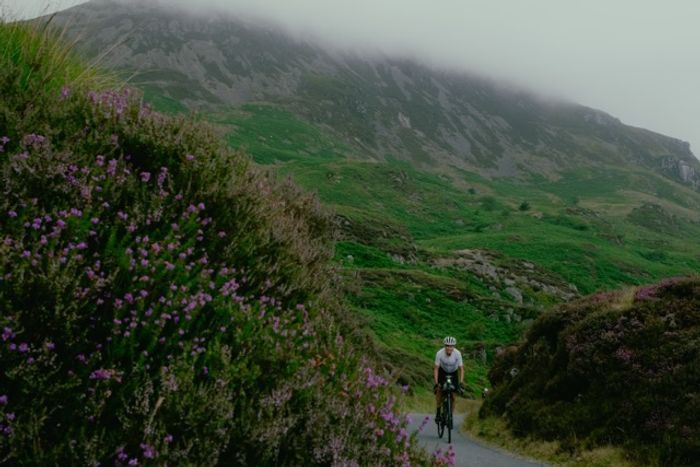
Every day is a bit different because you start and finish different places, but the main thing is this, I was trying to be fairly consistent as far as pace and making sure I was fueled, but then along the way I invited anybody that wanted to come out to ride to join me. So every day I wouldn't know who'd come up, and that was really fun. My first day I started at 4am in Chicago and I told people they could come but I didn't expect anybody to because it was so early and they could come any other time, but there were 100 people there to ride me out of town, and then about 100 miles later, 160km, I passed through Milwaukee and it was the same thing, and it's just cool to see. You know, for me, I see where cycling culture is, or it's often in the big cities, and I like to be in the countryside cause it's quieter, but it's really cool to connect with people like that and then see what we see along the way. You know, not every trip has to be competitive. I love doing this stuff with my parents, who are both in their 70s, with my aunt and uncles, just because it's like you get to witness the natural world and talk about it and everybody gets hungry and then you look for somewhere to eat and everybody gets tired and you look for somewhere to sleep, and it's kind of fun to push yourself but also just have a fairly simple life as you go. It's a real treat.
How Lael Wilcox uses her Quad Lock Mount to navigate thousands of kilometres
Your phone is mounted on your bike for thousands of kilometres. What role does navigation and staying connected actually play in a ride like this?
Oh, this is a great question. The Quad Lock Mount is brilliant. It helps me find things I need around me, so I just do searches for food or a small store, or sometimes I can look up when I might be able to get a flight to the next place. It helps me with logistics on the go and stay safe, because I have a Wahoo computer for main navigation, but I'm always detouring to go to a bike shop to get parts or other things along the way. The other good thing is I can stay connected with my family so they can call me, I can pick up the phone or I can call myself, and it's just really really nice to have it there, so not reaching in the back pocket, my phone's not getting all sweaty, and I can safely get where I need to go.
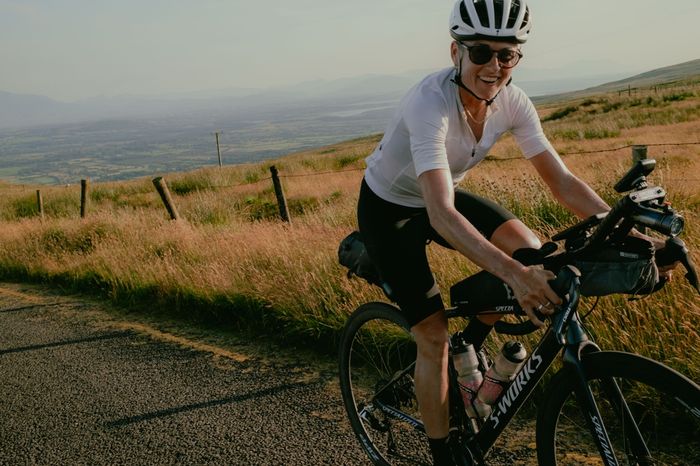
What recovery looks like for Lael Wilcox after ending a record attempt
A lot of athletes would have taken time off, yet 3 weeks after stopping, you were on the start line of the Pan Celtic Ultra. What does recovery look like for you?
You know, that's funny, I think it was two weeks after I finished that I raced Pan Celtic, which was a 1,400 mile race starting in Wales, taking the ferry over to Ireland, doing a loop around Ireland and then ferrying back to Wales. I hadn't been expecting to quit the Around the World ride. I built up all the fitness. I'd paced myself fairly well, so I wasn't completely exhausted. I just was overheated basically, I had kind of all this residual heat in my body, and so I thought, oh, this will be perfect, I'll go to Ireland and it'll be rainy and I'll just ride my bike and have fun, and it's awesome, but then in Ireland they had a heat wave for the first time in 40 years and it was probably 35 degrees every day for about three weeks, and I thought, you've gotta be joking, there's just heat everywhere. I mean, all of Europe has had basically heat waves since mid-June when I arrived until August, which is now. It's just been way, way hotter, but you know, I thought I don't wanna just sit around, I wanna go do something, so I raced Pan Celtic and it was the best decision I could've made. My wife Rue was there shooting photos and videos. We'd never been to Ireland, so we got to see it together. The race organiser is just a wonderful person and welcomed us into his home, and we got to meet so many new people and see a really beautiful place, so that to me was kind of just a really nice experience after having to quit something I really cared about. Since then, I haven't done anything competitive; I went to the Tour de France Femmes Zwift event to cheer for the women and just went and saw the solar eclipse in Spain, and I'm heading home soon. So it's been a really great summer, not what I expected, but you know, sometimes things just don't work out, and you just have to make the best of it.